Nie Wieder Krieg (1924) is now. Never Again War (2026)
The Most Important Slogan for Peace of the Century and Its Most Enduring Image
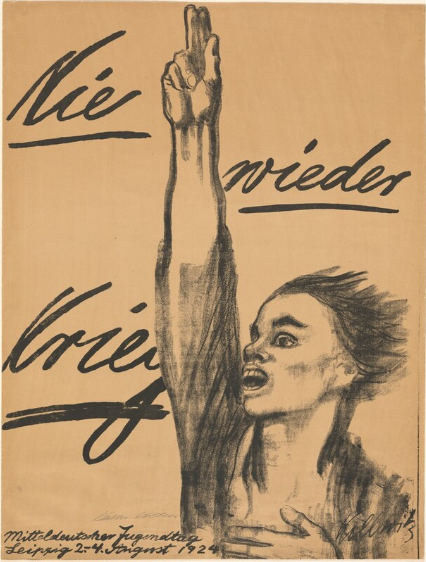
Nie Wieder Krieg (Never Again War), lithograph
1924 - K. Kollwitz
The Afterlife of Nie Wieder Krieg
The image was made for a single day. It contained a slogan that would make its legacy more enshrined in the world culture for pascifism for foreseeable future. First shouted in 1920, “Nie Wieder Krieg” is attributed to a survivor of the German army in World War I, one arm amputated, he raised his other arm and held the “Schwurhand” (swearing hand) up and made audible the enduring slogan. In 1924, Kollwitz returned from the Krieg woodcuts to her more native stone lithography printmaking practice. This is a form of printmaking that involves waxy/oily materials applied to a stone of unique properies, which is then used as the printmaking matrix/surface by its chemical treatment that allows for repulsion or absorption of ink. Paper is pressed to the stone and prints are made. Two hundred of her prints were made for collectors and then from that newsprint copies made by machine were pasted by the thousands or tens of thousands from 1924 until the image was banned by the Nazi party.
Originally, it was commissioned as a means of attracting pacifists to a day of anti-war rallies and speeches held in Leipzig on 1 August 1924, the tenth anniversary of the run-up to World War I and as such was not necessarily intended to outlast its function as ephemera. But the image and the words “Never Again” outlasted everything.
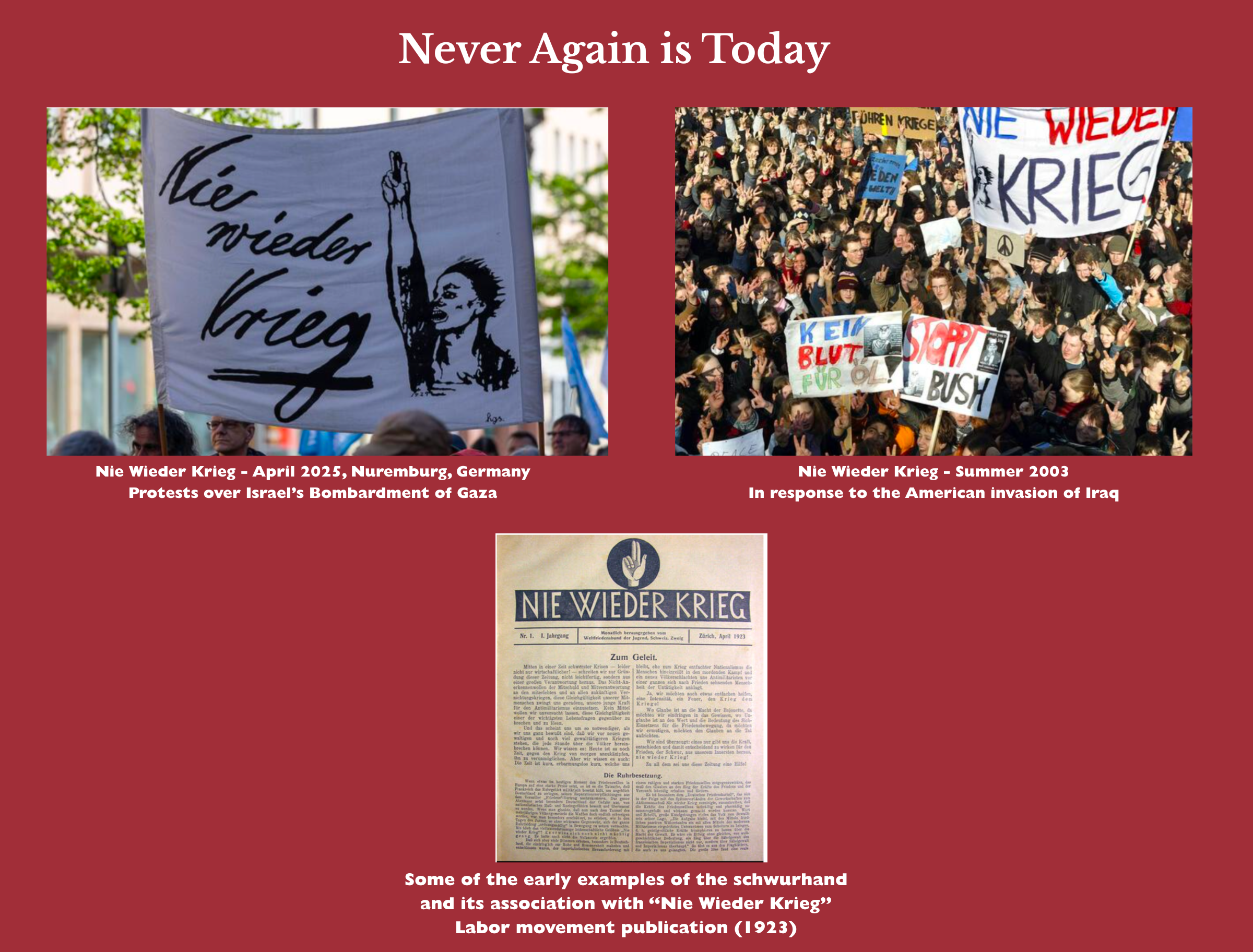
Under the Nazis
Its suppression was swift and total. The Nazi regime classified Kollwitz's work as Entartete Kunst (degenerate art) prohibiting its sale or exhibition and dismissing Kollwitz from her professorship at the Berlin Academy of Art. The anti-war image that had been plastered across German rail stations a decade earlier was now contraband. The overtones of grief and desperation, and the work's denunciation of war and injustice, were deemed directly critical of the Nazi regime and its political agenda. The regime that banned it went on to kill tens of millions of people. After WWII, the slogan “Nie Wieder” (Never Again) became and still is a sign of remembrance of the holocaust and a call to the end of all senseless violence.
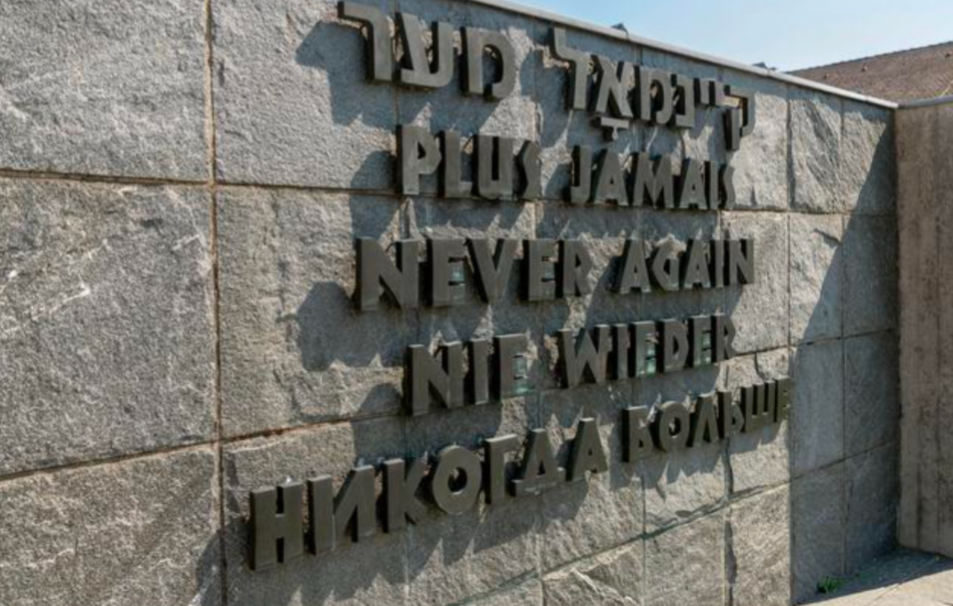
Dachau Holocaust Memorial
The Divided Germany
After 1945, both German states claimed Kollwitz and her message, albiet for different philosophical purposes. For many years, West Germany honoured Kollwitz as a consoler and mother, while East Germany held her up as an anti-fascist and champion of the proletariat (which as the topic of her work in the first period of her career prior to the first world war. In both East and West Germany, scores schools, streets, and squares came to be named after her. The persistance of “Nie Wieder Krieg” was simultaneously a symbol of mourning in the West and communist revolutionary solidarity in the East. In East Berlin, the Akademie der Künste, the Kupferstichkabinett, and the Otto Nagel House regularly exhibited her work, while West Berliners campaigned for decades for a dedicated museum, a wish only met in the mid-1980s, when two museums were established almost simultaneously in Berlin and Cologne.
The image's ideological malleability was precisely the point and precisely what Kollwitz had built into it. No country. No enemy. No time. The raised arm could be claimed by anyone with a cause, and it was.
Vietnam and the American Peace Movement
Some alive may have see this image in bright colors surrounding the Vietnam War or through works appropriated by other artists. A poster in the Yanker Collection of political posters at the Library of Congress shows the figure recontextualized with English text and a bright-pink palette more resonant with the poster aesthetic of the 1960s and 70s. A photographic transfer process to lift the figure from a reproduction of the original. Kollwitz's signature transferred with the image, but the strong message likely overshadowed the identity of the original artist. Millions of Americans marched behind this image without knowing who made it.
The 1970s and 1980s Peace Movement
The poster was repeatedly used in the peace movement of the 1970s and 1980s. In West Germany in particular, the image returned with force during the NATO double-track decision protests (the largest mass demonstrations in postwar German history, mobilizing hundreds of thousands against the deployment of American nuclear missiles on German soil). The slogan Nie Wieder Krieg became the organizing cry of a movement that saw itself in direct continuity with everything Kollwitz had witnessed and everything she had refused to accept.
In the 21st Cenury
One hundred years after she drew it on Bavarian limestone, the arm is still raised in anti-war protests internationally. The phrase “Nie Wieder Krieg” was not of Kollwitz directly, although it was made popular by her, and her image is likely the most reproduced image bearing the slogan and arguably the single most reproduced work of anti-war art of the 20th century. Now in the 21st century, it is seen more seldomly but does surface especially in Germany. Despite the popularity of other images like “The Flower Thrower” (Banksy, 2003) that evoke pascifist resolve, “Nie Wieder Krieg” still swears the oath that is the cry of people around the world asking to end the cycle of wartime violence.
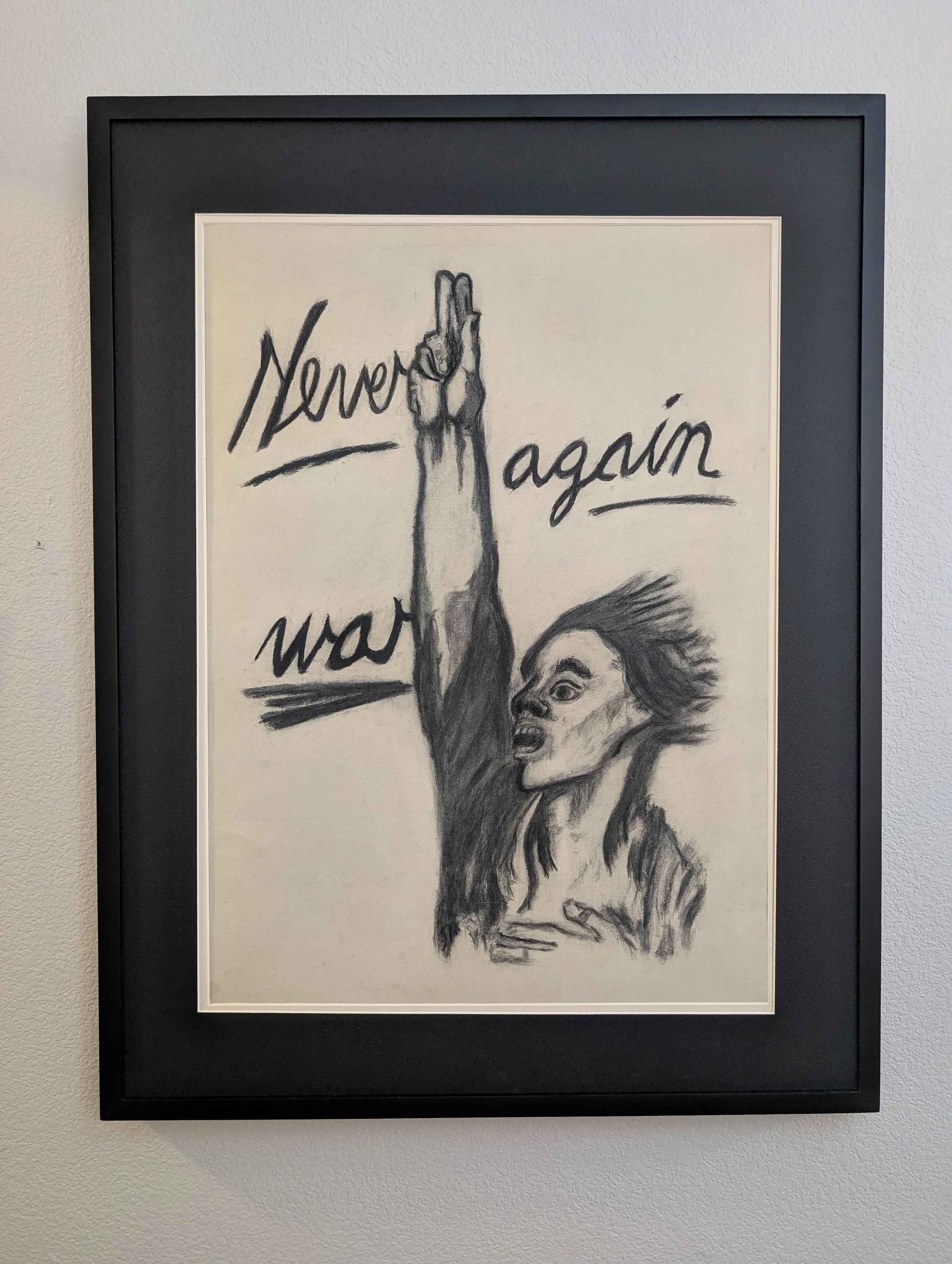
My Study : Never Again War (2026)
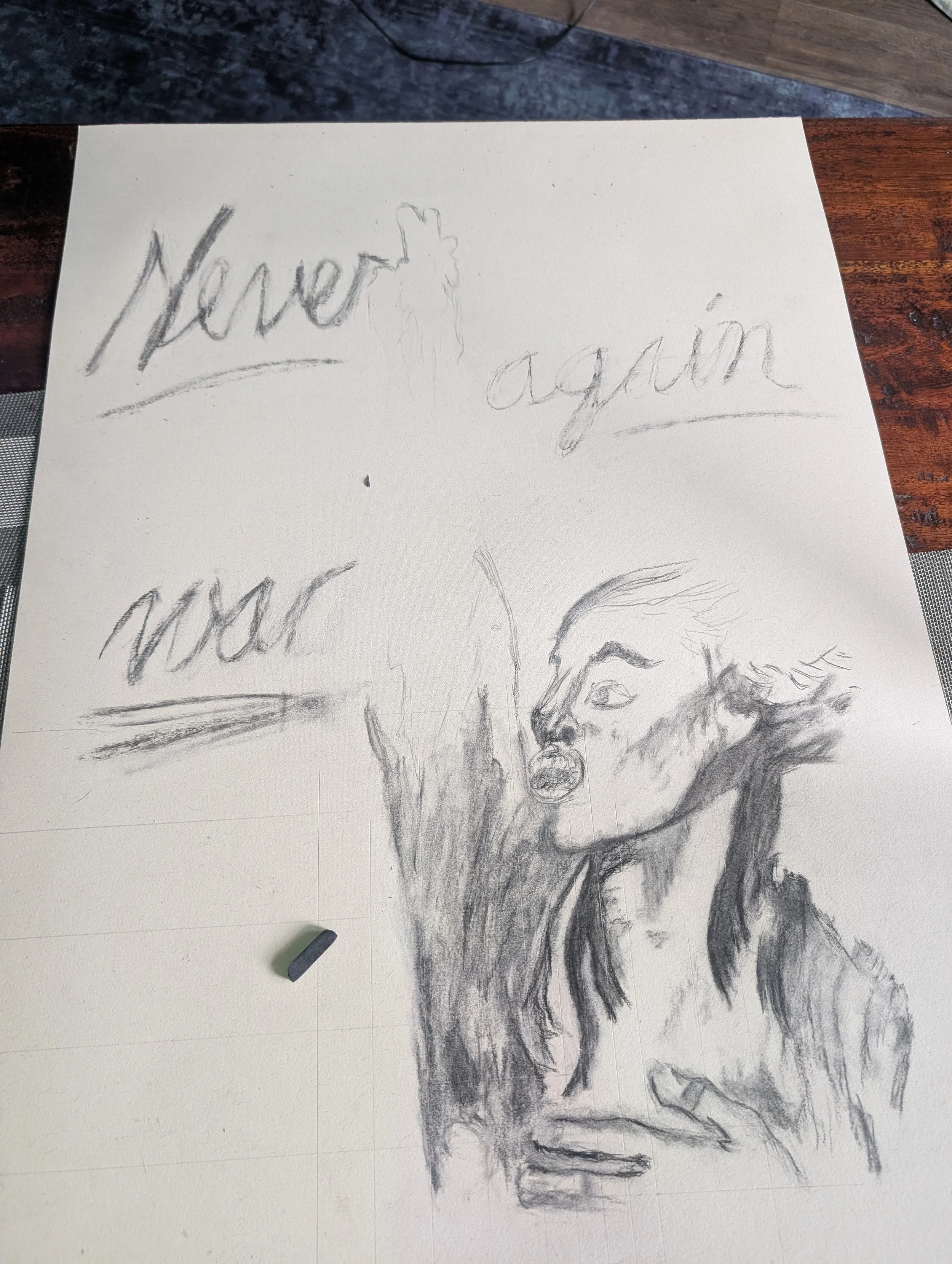
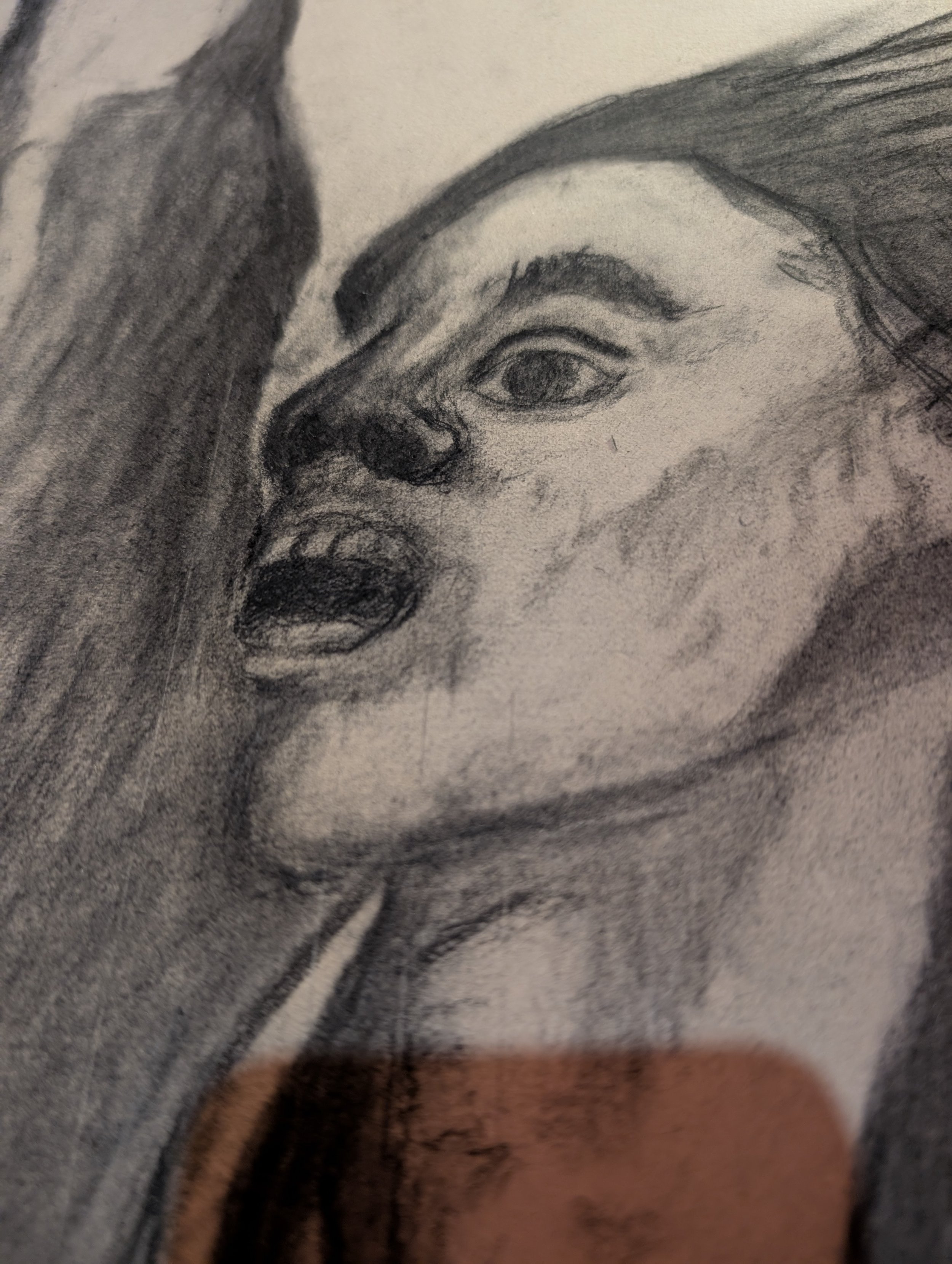
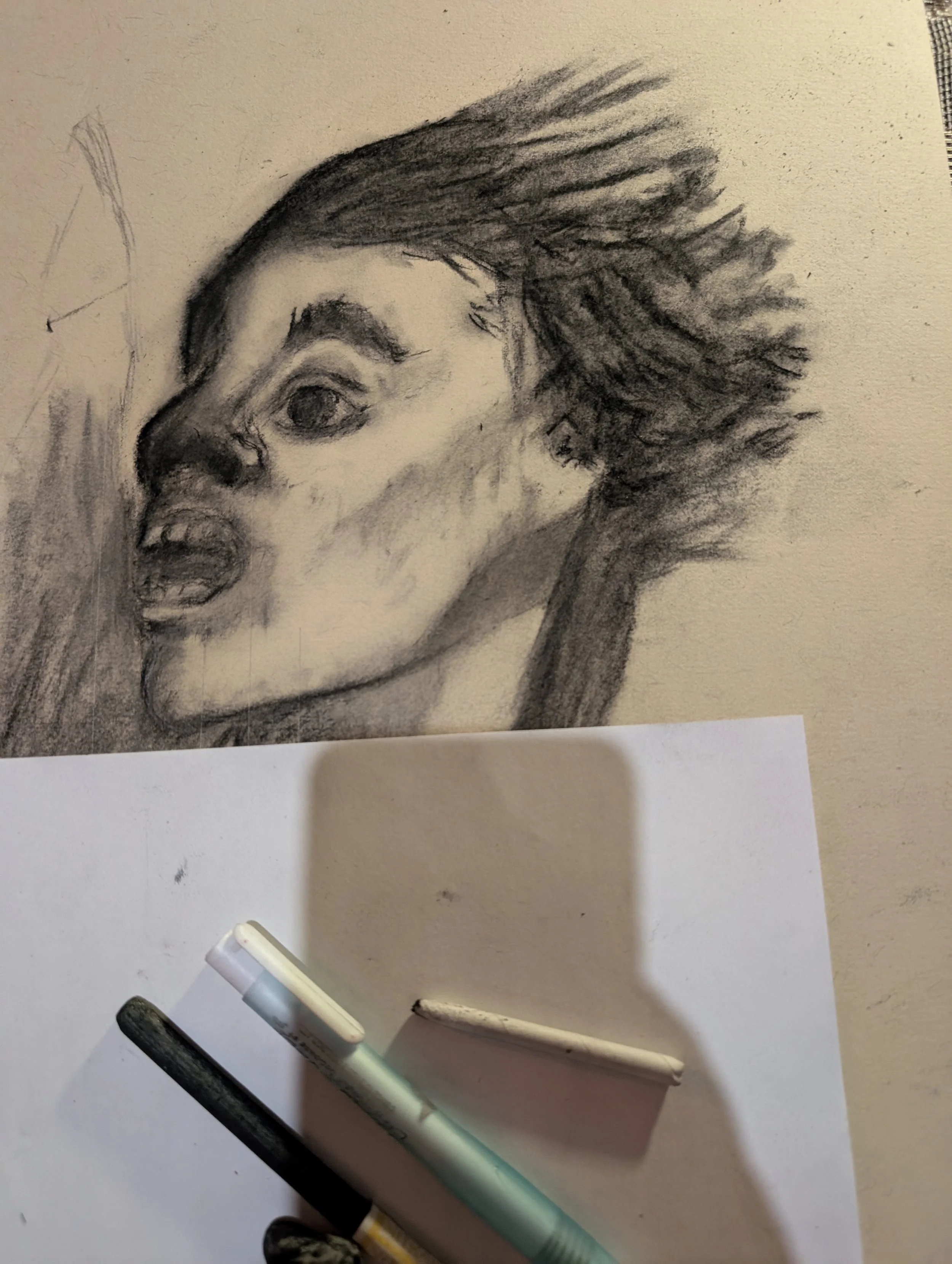
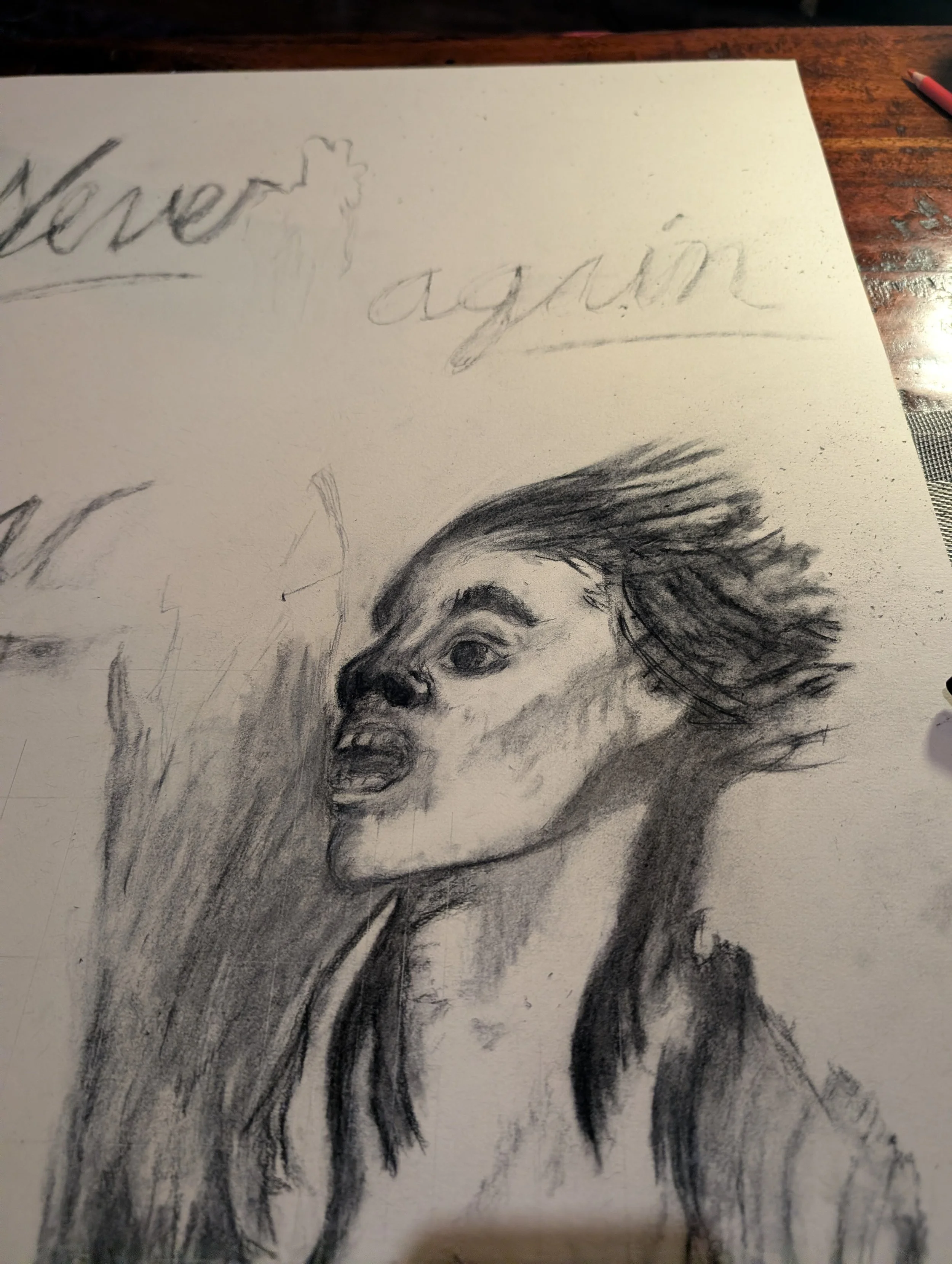
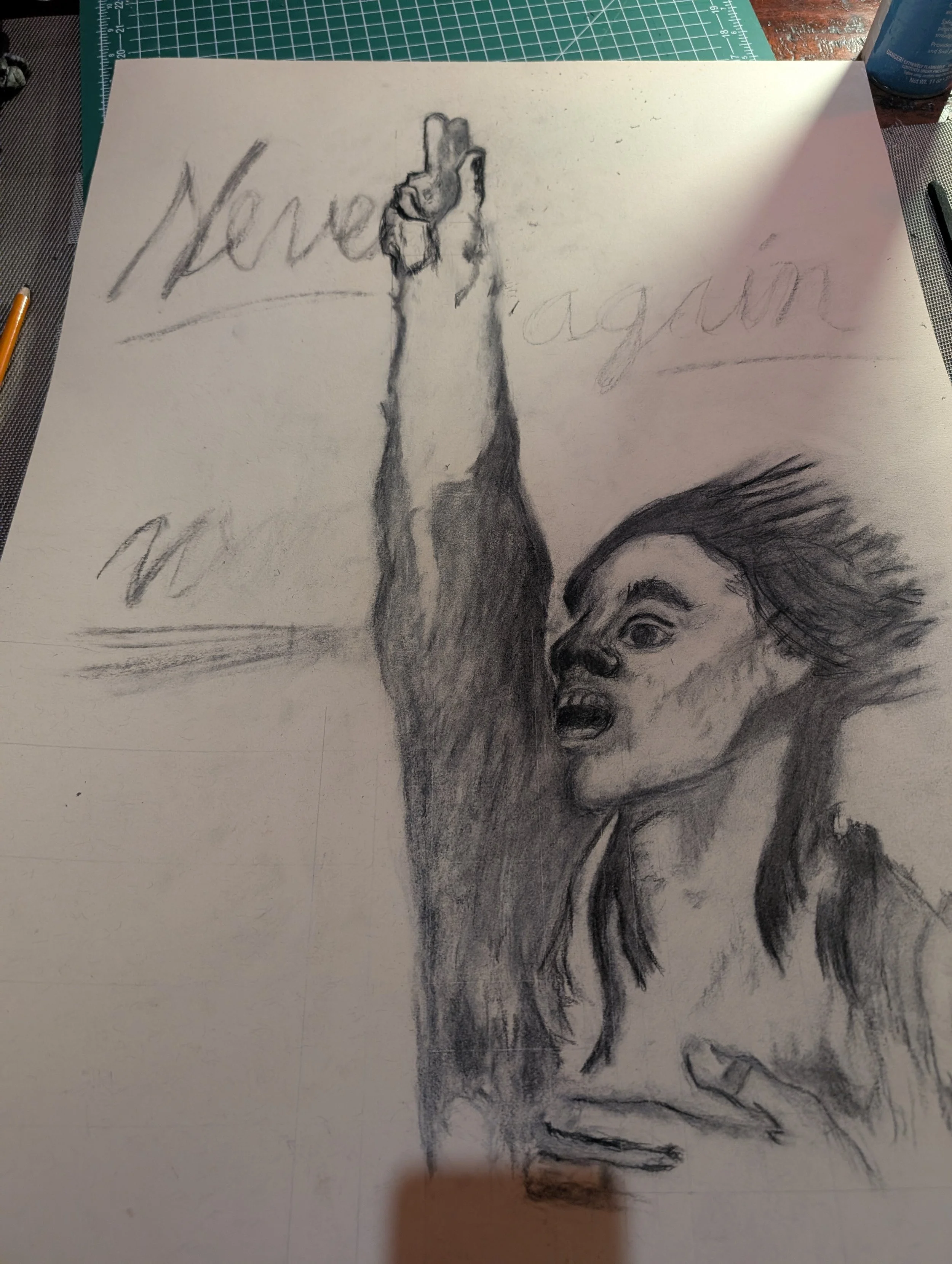
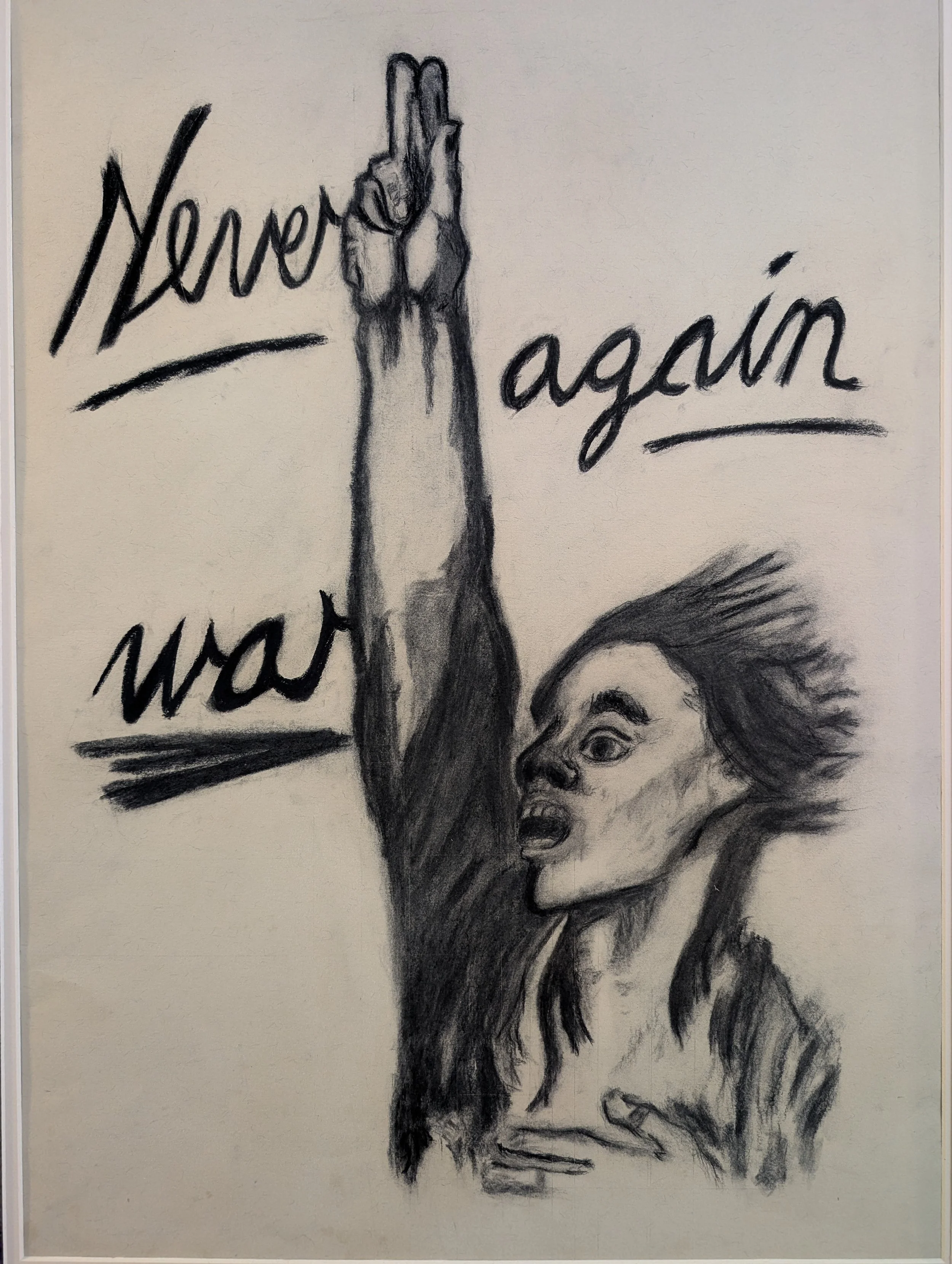
Nie Wieder Krieg was a world rally cry but it stemmed as a reaction of one nation’s citizens to its actions. The use of the German language is of course obvious as it is from a German artist, but it also roots it to a call for one’s own reckoning with their nation. In that vein, I have created my own interpretation offered for viewing here in charcoal, 20”x 28” (about 20% smaller than the original) on Pescia paper.
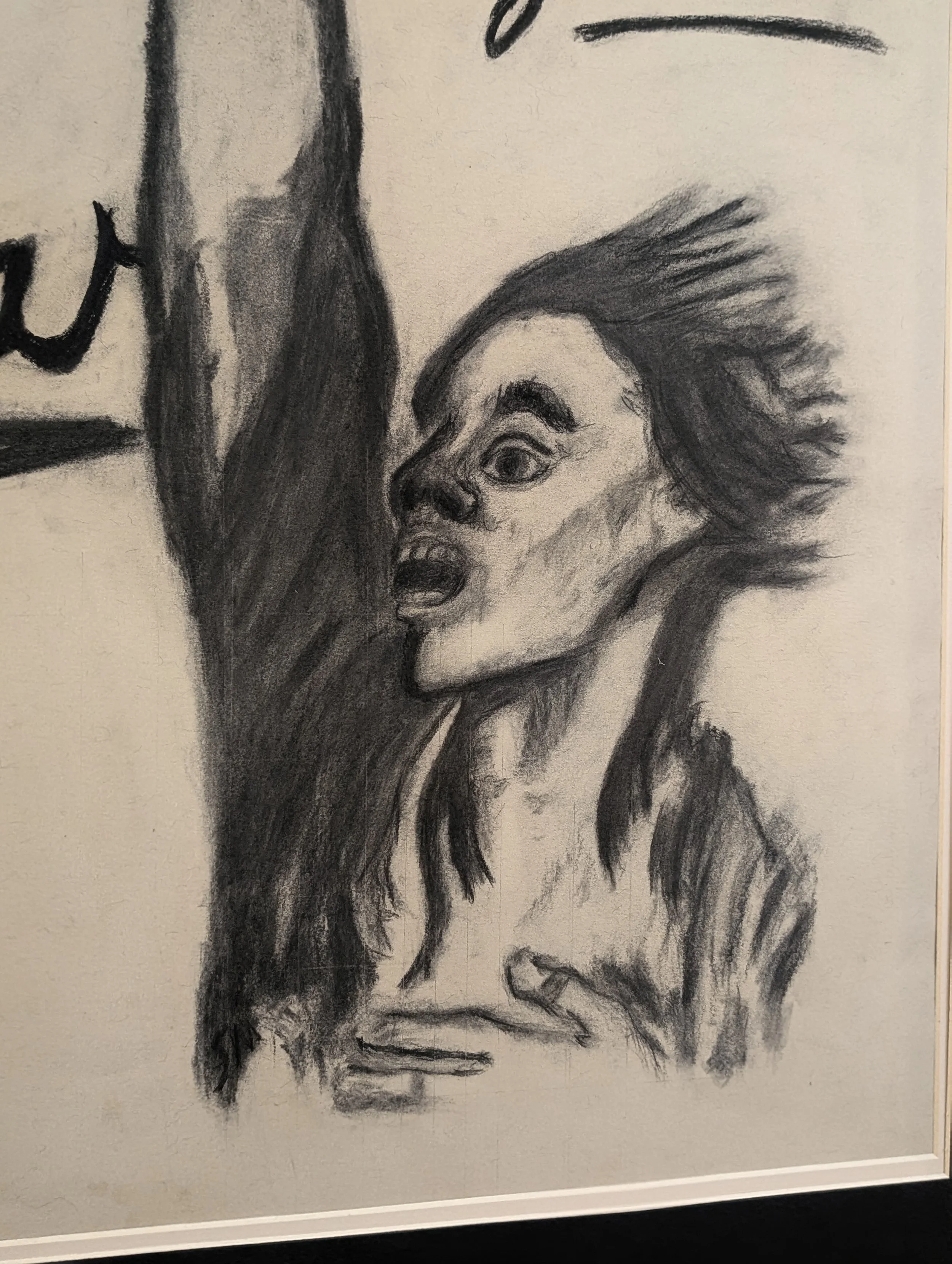
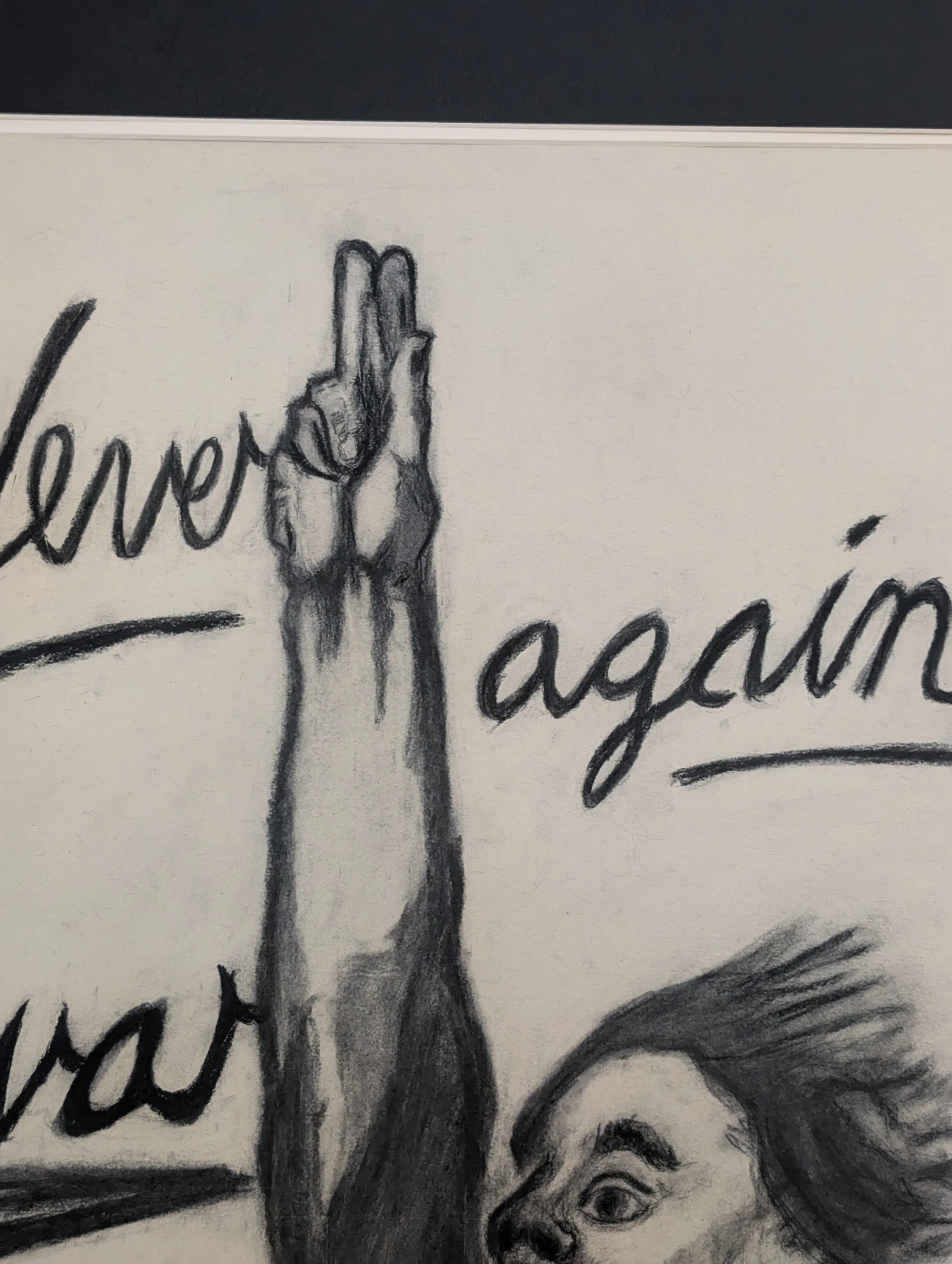
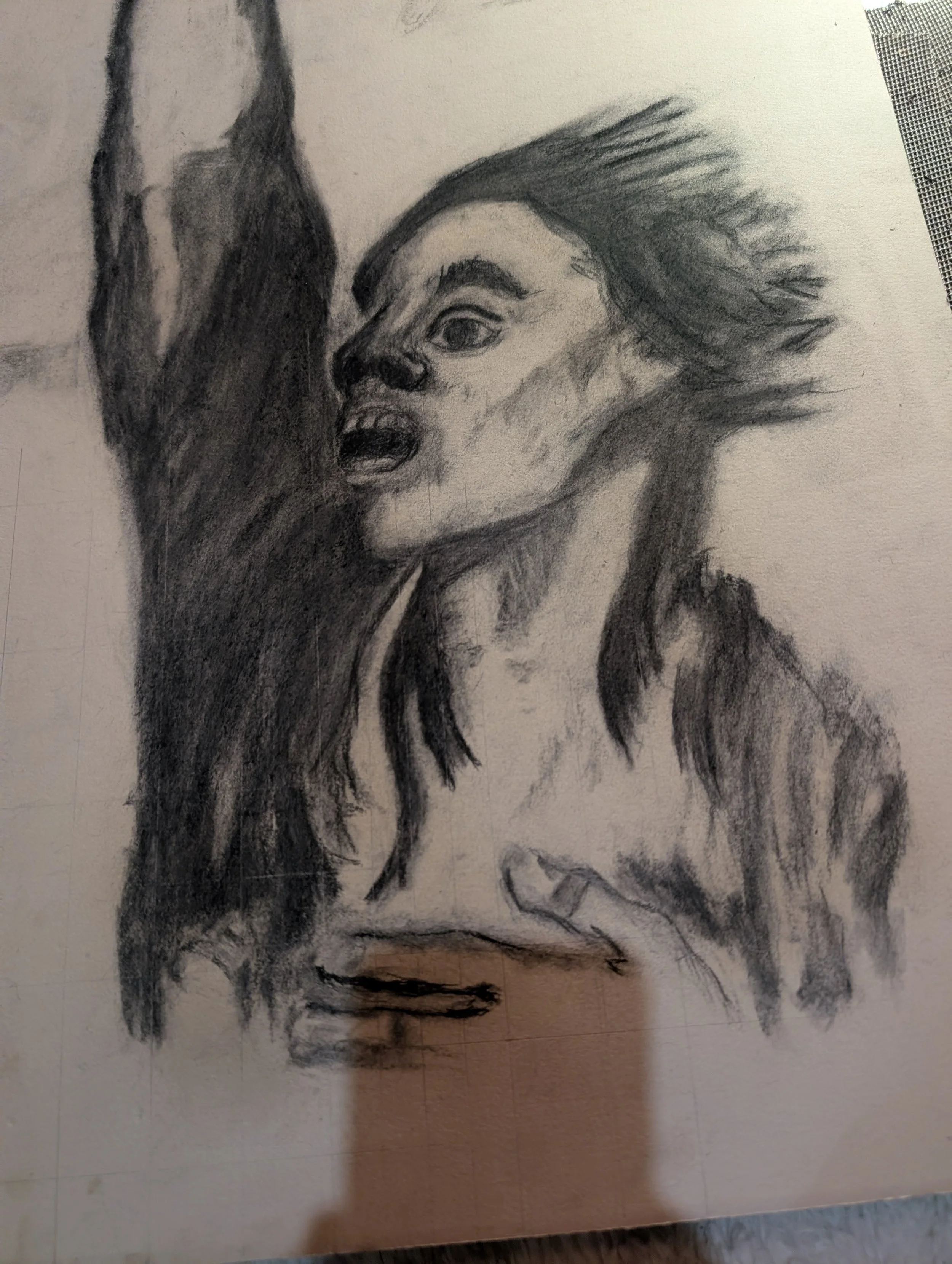
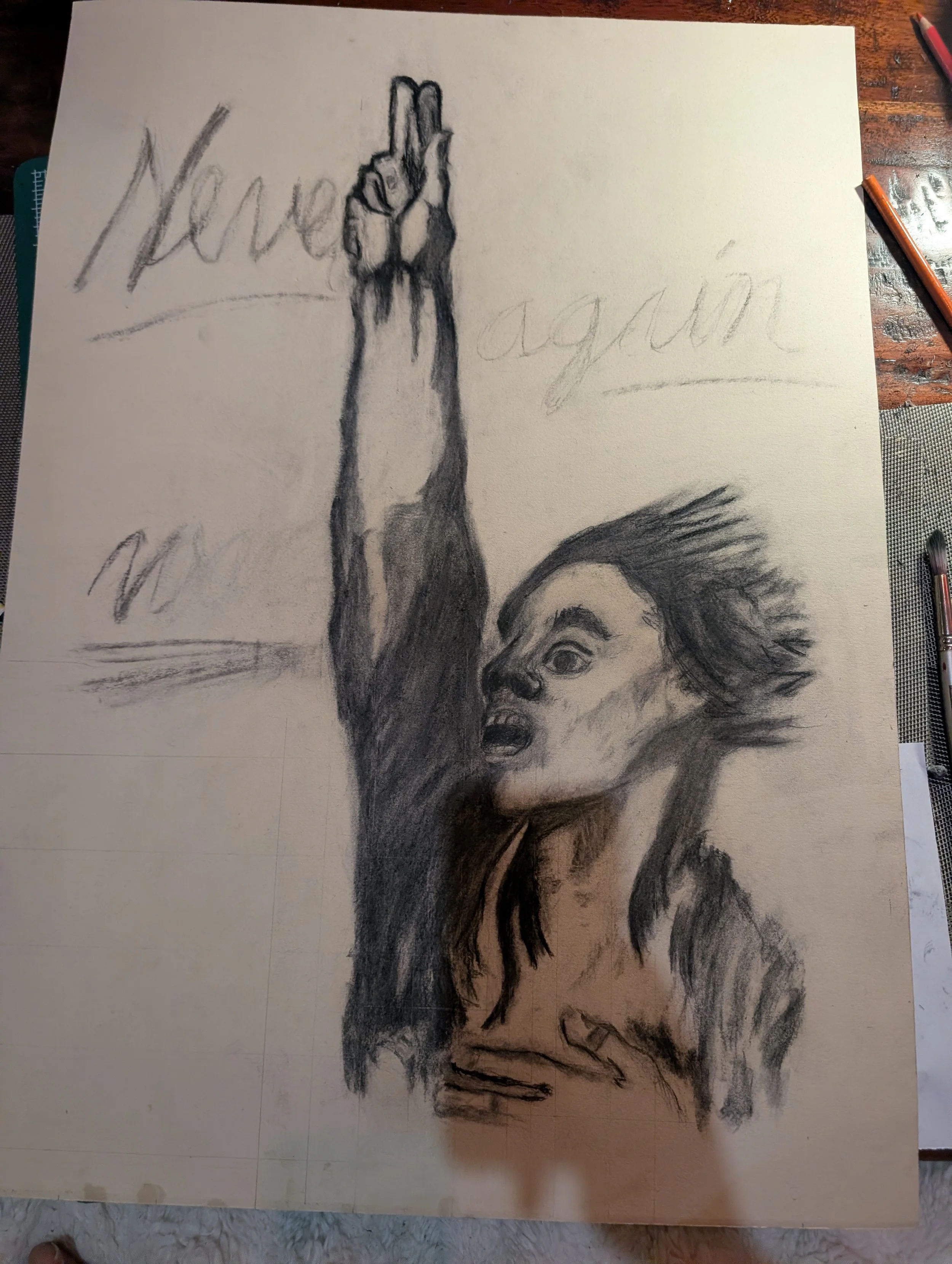
It is a remarkable composition. The arm bisects the void behind, no background, no enemy, no symbolism. As always, the hands and the faces in Kollwitz’s compositions bear the “work” and “psychology”, retrospectively. The two hands are a sharp by conjoined counterpoint. The right-hand raised in the taking of an oath. Strong, darkened, the zenith of the composition. The left-hand is more subtle, faint and supports the symbol of an oath by being laid over the heart. The face is both in aguish, resolve, and anger. It seems terrified and terrifying. The duality and subtle nature of the open mouth figure is part of the power.
The figure has at times been “she” or “he” and that duality also plays into the universality of the image. The speculation that it was the survivor of WWI, Otto, who first raised an arm in 1920 to cry “Nie Wieder Krieg” or if it bears likeness to her young son Peter (died, age 18 in the opening months of the war). The specificity of it is not of concern. What is clear is that it is a youth. Yes, commissioned for a social labor youth rally, but also because by 1924, a youth who would cry “Nie Wieder Krieg” would not have been a solider, but the next generation looking to end what the previous had heaped on.
The words broken by the arm are placed in a way that feels like a slogan but also add sonic volume to the piece as an implication of a resolute shout. In hers, the word Krieg is both more heavily underlined but also the only word that collides into the composition and falls behind the figure. In my English rendition, I hope to capture these elements.
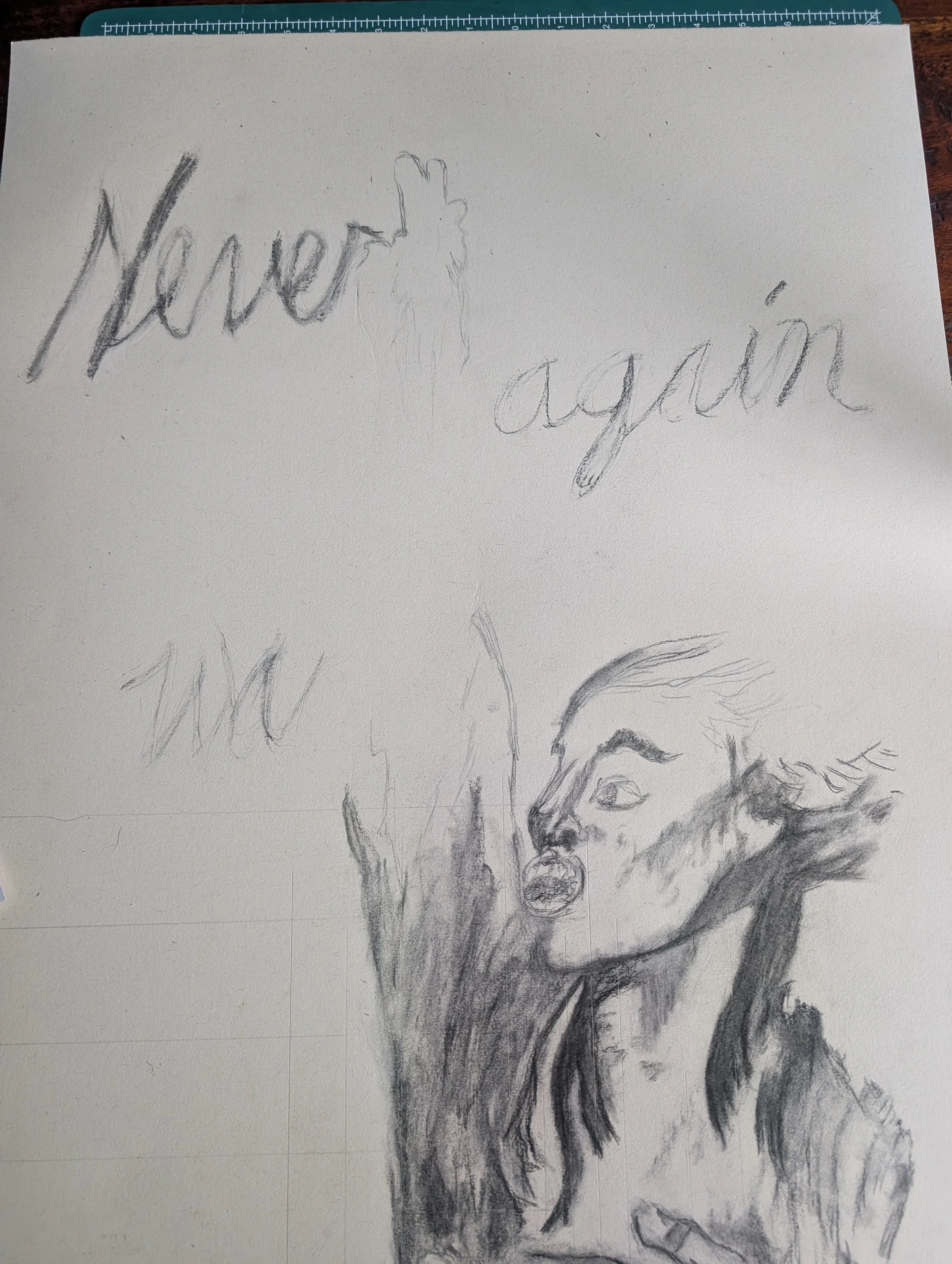
Below is both the finished work and the process shots during the making. This work was sold to a close friend and collector and commissioner of my work previously in support of the project materials and launch. It is with great gratitude that I can say this work was the first sold in the “Never Again Krieg” project.